25 Things You Didn’t Know About Iceland
· Updated · BootsnAll
Updated September 2026. Katie wrote the first version of this list in 2010. Some of it has aged well (the police still don't carry guns), and some of it hasn't (the country has grown by about 75,000 people). Every number below has been checked again, with sources linked so you can dig further.
1. It's a bit smaller than Ohio, and about a tenth of it is ice
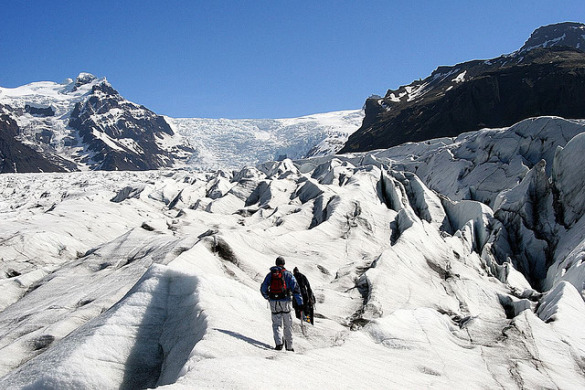
Iceland covers about 103,000 square kilometers (roughly 40,000 square miles), a little smaller than the US state of Ohio. Glaciers cover around 10% of the country, and they are shrinking. The biggest, Vatnajökull, measured about 7,600 square kilometers in 2023, and the Natural Science Institute of Iceland says the retreat has been very fast since 1995.
>> Read about transportation in Iceland
2. The name is misleading
The old story goes that Erik the Red gave Greenland its friendly name to lure settlers, and Iceland got stuck with the chilly one. Reykjavik's winters are about as cold as New York City's. January's daily mean is 0.7°C in Reykjavik and 0.9°C in New York's Central Park (both 1991-2020 averages). The difference is the wind, which is why the weather feels colder than the thermometer says.
3. Fewer than 400,000 people live here
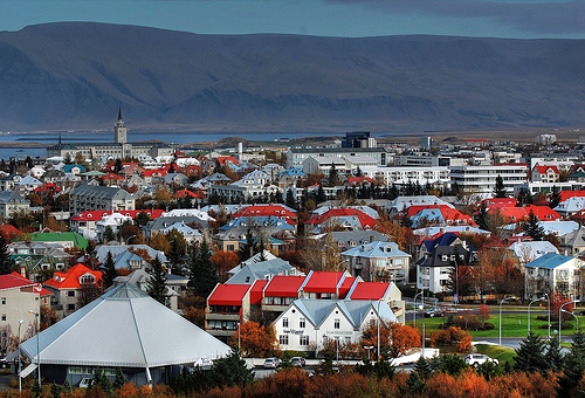
Iceland had 396,500 residents at the end of June 2026, and 253,230 of them lived in the capital region. That's close to two out of every three people. The city of Reykjavik itself had 139,804 at the start of 2026, and it's the northernmost capital in the world. The first version of this list said 320,000 people.
4. It's closer to New York than you'd guess
Iceland sits in the North Atlantic just south of the Arctic Circle, which crosses the small island of Grímsey but not the mainland. It's in Europe and in the Schengen area, but not in the EU. From JFK to Keflavík is about 4,160 kilometers (2,590 miles) in a straight line, roughly the same distance as New York to Los Angeles.
>> Learn more about flights to Iceland
5. Summer daylight is relentless, winter daylight is short
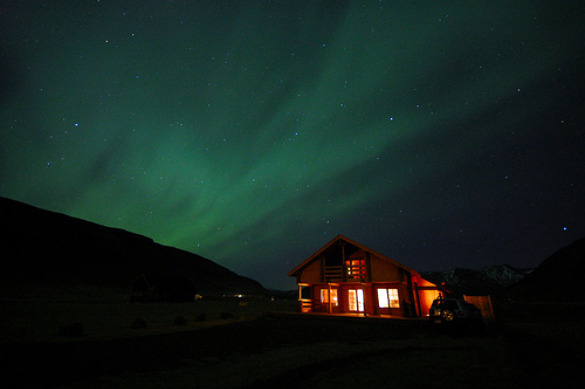
On the June solstice in Reykjavik the sun rises before 3am and sets after midnight, and it never gets properly dark. On the December solstice the sun is up for only about four hours and 15 minutes, from around 11:15am to 3:30pm. Those long, clear winter nights are when you have a shot at the aurora.
>> Read about where and how to see the Northern Lights in Iceland, and about the midnight sun
6. The ground is pulling apart under your feet
Iceland sits on the boundary between the North American and Eurasian plates, which are slowly spreading. That gives you the rift valley at Thingvellir, the hot springs at Geysir, and small earthquakes almost every day. It also gives you big waterfalls. Dettifoss in the north is, according to Vatnajökull National Park, the most powerful waterfall in Europe, with a drop of 44 to 45 meters. Spend enough time in these landscapes and the elf stories start to make a strange kind of sense.
7. Surtsey is younger than most of the people reading this
The island of Surtsey, in the Westman Islands, broke the surface of the ocean on 14 November 1963, and the eruption went on until June 1967. It has been a UNESCO World Heritage Site since 2008, and only a few scientists are allowed to land. These days it has competition for "newest land in Iceland": the lava fields near Grindavík were laid down between 2023 and 2025 (more on that in number 16).
8. There aren't many tall trees
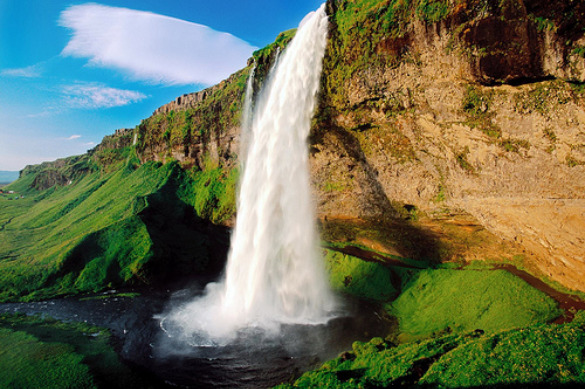
You'll find volcanoes, fjords, glaciers, glacial lagoons, black sand beaches, lava caves and sea cliffs, all covered on our page on natural wonders in Iceland. What you won't find is much forest. The old joke still gets told: if you get lost in an Icelandic forest, just stand up.
9. It was settled in the 870s and became a republic in 1944
Norse settlers arrived in the 9th century, and Ingólfur Arnarson is traditionally credited as the first permanent settler, building his farm in what is now Reykjavik in 874. You can see remains from that era at the Settlement Exhibition. Iceland came under Norwegian and then Danish rule, and became a fully independent republic on 17 June 1944, which is why that date is the national holiday.
>> Read more on the history of Iceland
10. It has the world's oldest parliament
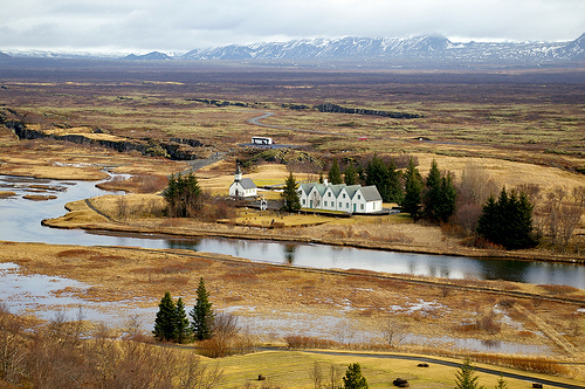
The Althing was founded in 930 at Thingvellir, and it's generally described as the oldest legislature in the world. Iceland is a parliamentary republic: the prime minister runs the government and the president's role is largely ceremonial. The current prime minister, Kristrún Frostadóttir, has held the job since December 2024.
11. The phone book goes by first name
Most Icelanders use patronymics, so a "last" name is built from a parent's first name: Katrín Karlsdóttir is Katrín, Karl's daughter. Surnames don't run in families the way they do elsewhere, so directories are sorted by first name, and everyone from the bus driver to the prime minister goes by their first name too.
12. There are no trains
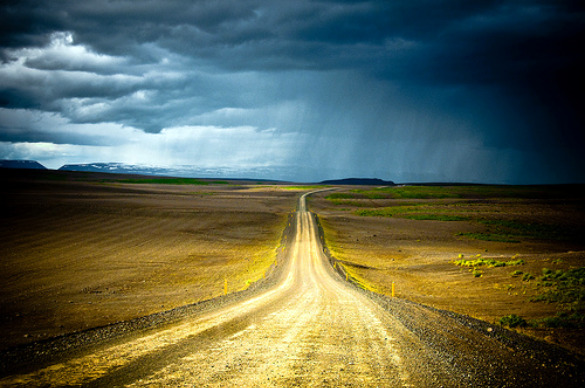
Iceland has no railway, so you get around by car, bus or domestic flight. Buses cover the Ring Road towns, but plenty of the best places are only practical with your own wheels. Since 1 January 2026 every car also pays a kilometer fee of 6.95 ISK per km, which rental companies build into their prices.
>> Learn more about driving in Iceland and bus travel in Iceland
13. The Ring Road is only 50 years old
Route 1 runs 1,309 kilometers (813 miles) around the country. It was only completed in 1974, when the bridge over the Skeiðará river opened in time for the 1,100th anniversary of the settlement. Plenty of other roads are still gravel, and the highland F-roads are for 4x4s only and open just in summer. Check umferdin.is for road conditions before you set off.
>> Read about driving Iceland's Ring Road
14. The electricity is almost all renewable
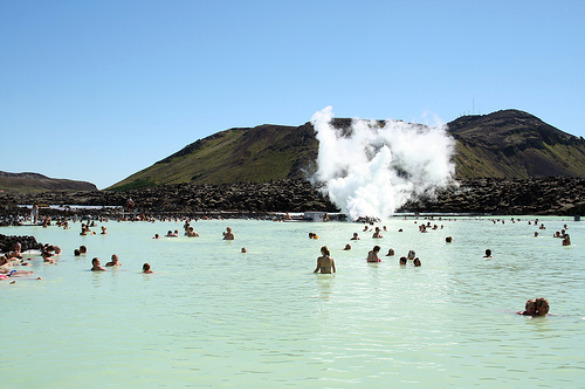
About 70% of Iceland's electricity comes from hydropower and 30% from geothermal plants, and geothermal energy covers more than 90% of the energy used to heat homes, according to Iceland GeoSurvey (ÍSOR). The famous Blue Lagoon is man-made: its water is runoff from the Svartsengi geothermal power station next door. (Earlier versions of this list said it came from a hydro plant. It doesn't.)
15. It has been ahead on LGBTQ rights for a long time
Same-sex couples could register partnerships from 1996, and same-sex marriage has been legal since 27 June 2010, after Parliament passed the bill 49 to 0. Jóhanna Sigurðardóttir, prime minister from 2009 to 2013, was Iceland's first female prime minister and the world's first openly LGBTQ head of government.
16. The volcanoes are busier than ever
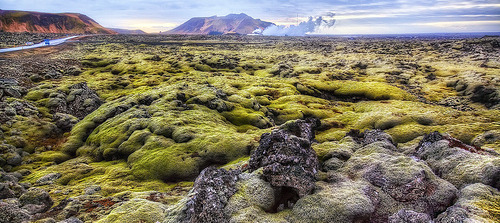
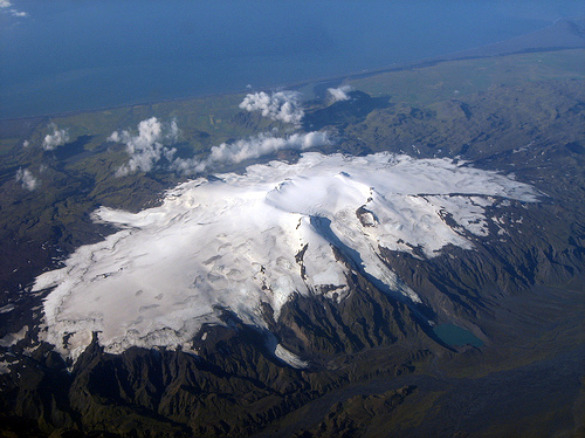
When this list was first written, the most recent eruption was Grímsvötn in May 2011. Since then the Reykjanes peninsula, the stretch between Keflavík airport and Reykjavik, woke up. Nine eruptions hit the Sundhnúkur crater row near Grindavík between December 2023 and August 2025, cutting roads and forcing Grindavík and the Blue Lagoon to evacuate several times; the last one ended on 5 August 2025. As of September 2026, Safetravel says no eruption is active there, Grindavík is open, and walking on the new lava is strictly forbidden. The Icelandic Met Office says magma is still building up under Svartsengi, so another eruption could start with little warning. Check safetravel.is before you go.
>> Read more about volcanoes in Iceland
17. Most police officers don't carry guns
Crime is low, and in general the police in Iceland don't carry firearms. Officers on patrol rely on batons, pepper spray and, more recently, electroshock weapons. Guns stay locked away unless the senior officer on duty orders officers to arm in an emergency, and armed calls usually go to the special unit, the Víkingasveitin. Guns aren't banned (plenty of Icelanders hunt with licensed firearms), but they aren't part of everyday policing.
18. Beer was illegal until 1989
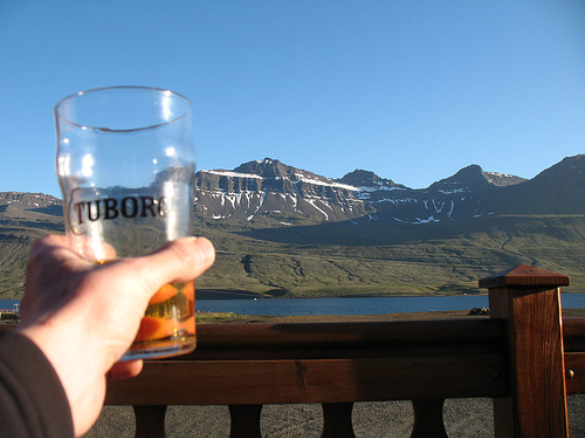
Prohibition started in 1915 and covered all alcohol. Wine came back in the early 1920s and spirits in 1935, but strong beer stayed banned until 1 March 1989, which is now celebrated as Beer Day. The oddest part: the unofficial national spirit, Brennivín, nicknamed "black death", is 40% alcohol in the state liquor stores, and it has been sold legally since 1935, while beer stayed banned.
>> Learn more about drinking in Iceland
19. There's a little Iceland in Utah
Hard times in the 19th century sent thousands of Icelanders to North America. Many settled in Manitoba, where they founded New Iceland on Lake Winnipeg in 1875. Others were Mormon converts who went west, and Spanish Fork, Utah became the first permanent Icelandic settlement in the United States between 1855 and 1860. The town still holds Icelandic Days.
20. You don't need to tip
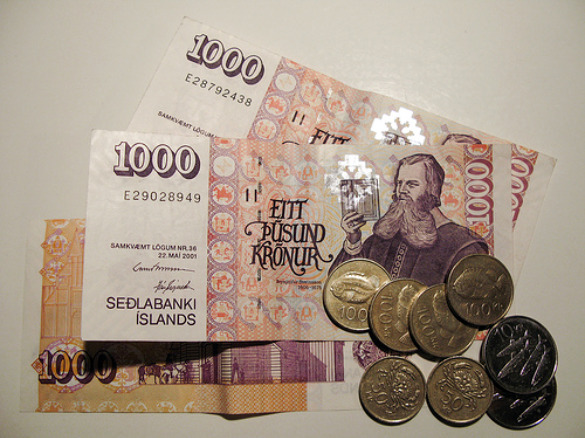
Service is built into the price in Iceland, so nobody expects a tip. Nobody will be offended if you leave something for great service, either.
>> Learn more rules for tipping in Iceland
21. Icelandic invents its own words
Icelandic has changed so little that people can still read the medieval sagas. Linguistic purism has long been a cornerstone of Icelandic language policy, so instead of borrowing a foreign word, Icelanders usually build a new one out of old Icelandic parts. English is taught in school and almost everyone in Reykjavik speaks it well, but a "takk" (thanks) still goes a long way.
>> Read about the Icelandic language
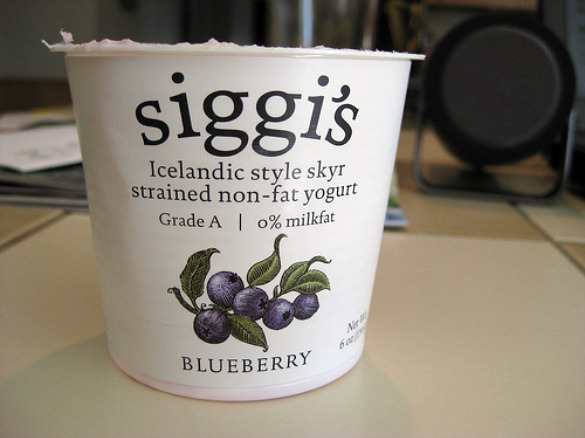
22. There's still no McDonald's
Traditional food includes some things that surprise visitors, like fermented shark (hákarl), singed sheep's head and sour ram's testicles, most of it eaten during the midwinter Þorri festival. Everyday food is simpler: lamb, fish and skyr, a thick, high-protein cultured dairy product that eats like strained yogurt. McDonald's closed all three of its Icelandic restaurants in 2009 during the financial crisis, and it never came back.
>> Read more about Icelandic food and Icelandic delicacies
23. Going out is expensive, so people start at home
Alcohol is heavily taxed, and the main place to buy wine, spirits and proper beer is the state-run Vínbúðin chain. That's why Reykjavik's weekend runtur (pub crawl) starts late: people drink at home first and hit the bars around midnight.
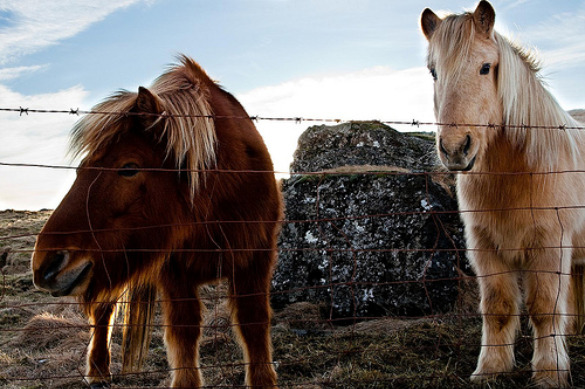
24. An Icelandic horse that leaves can never come back
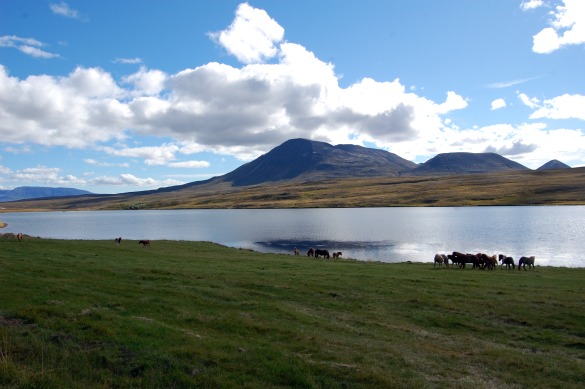
Icelandic horses are small, friendly and famous for the tölt, a smooth extra gait. Statistics Iceland counted 63,120 horses in 2024 and 349,936 sheep in 2025, so there's now roughly one sheep for every person. To protect the breed from disease, Iceland has banned horse imports since 1882, so a horse that leaves the country can never come back. The only land mammal native to Iceland is the Arctic fox.
25. It keeps topping the world rankings
Iceland came first on the UN's Human Development Index in the 2025 report, which uses 2023 data. It also ranked first in the World Economic Forum's Global Gender Gap Report for 2025, its 16th year in a row at the top. Add long life expectancy, clean air and hot water on tap, and you can see why so many visitors start checking job listings on day three.
>> Ready to plan? Start with our Iceland travel guide and when to go to Iceland.
Photos by: WanderingtheWorld (www.LostManProject.com), Bob Jagendorf, totalpodcastrophe, jtjdt, pocuis, Zanthia, Ewan McIntosh, Dunechaser, Hello, I am Bruce, jff ryn pmr, needfire, jasperwiet