History of Iceland
Updated · BootsnAll
 Early History
The Norse people are the first believed to have settled Iceland; they arrived as early as the 800s. Ingólfur Arnarson, the first known permanent settler, built his house near Reykjavik in 874, and by 930, the land was mostly settled. The Althing, Iceland’s present-day parliament and the world’s oldest existing national assembly was founded at Thingvellir (‘Parliament Plains’) in 930 AD. Christianity was peacefully adopted at Thingvellir in the year 1000 AD and the first diocese was established in South Iceland in 1056.
The Sagas
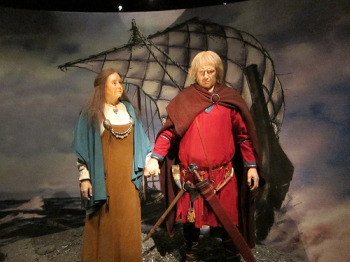
Between 1120 and 1230 the Norse Sagas were written down on vellum in Iceland. The stories and legends tell tales of Norse bravery and strength and provided a sense of cultural heritage for everyday Icelanders. They are still valued and passed on today (including through the Saga Museum in Reykjavik) and include some of the classics of world medieval literature .
Harsh Times
The volcano Mt. Hekla erupted several times in the 1300s, causing widespread death and destruction. Iceland fell under the control of Denmark in the late 14th century. At this time, poor soil and harsh conditions made Iceland one of the poorest countries on the planet. The Plague swept through Iceland several times during this period, killing about half of the country’s population each time. Smallpox came in the 18th century (this time killing about one-third of the people), followed by the eruption of the Laki volcano, which killed half of the country’s livestock and resulted in a devastating famine that killed 25% of the remaining people.
In the late 19th century, a run of hard winters and natural disasters pushed somewhere between 16,000 and 20,000 Icelanders, roughly a fifth of the population, to emigrate to the US and Canada between 1870 and 1914. Around this time, Jón Sigurðsson began to rally the people and build the Icelandic Independence Movement. By 1918, Iceland was recognized as a sovereign state under the Danish king, an agreement that would last 25 years.
Independence and Modern Day
At the end of 1943, the Act of Union agreement expired, and over the course of four days, Icelanders voted overwhelmingly in favor of ending the union and creating an independent republic. Iceland formally became an independent republic on June 17, 1944, with Sveinn Björnsson as the first president.
Over the next 50 years, the country’s economy and populations grew exponentially. The main industries shifted from fishing and farming to the production of geothermal energy and banking. In 2008, that bubble burst however. Iceland’s three biggest banks collapsed within three days in October, and the government turned to the IMF for an emergency loan program. The country itself never went bankrupt, and it completed the IMF program in August 2011. Since then tourism has grown into a pillar of the economy, making up 8.7% of GDP in 2024 according to Statistics Iceland.
Photo by Jeffrey Simpson