Information
Updated · BootsnAll
 Updated September 2026
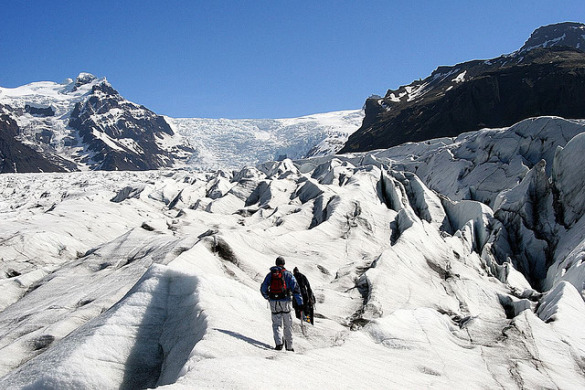
Iceland is an island country in the North Atlantic, between North America and Europe, a little smaller than the US state of Ohio. It's considered part of Europe and belongs to the Schengen area, but it isn't a member of the European Union. The name is a bit of a misnomer: glaciers cover around 10% of the land, but thanks to the Gulf Stream the climate is milder than you'd expect this far north. Winter days are short, summer nights barely get dark, and all year round the landscapes are some of the most dramatic on Earth.
Settled by Norse Vikings in the 9th century, Iceland's isolation meant its people had to be resourceful and live off the land and sea. That still shows. Much of what Icelanders eat is produced at home, and the power is clean: about 70% of the country's electricity comes from hydropower and 30% from geothermal plants, and geothermal energy covers more than 90% of the energy used to heat homes, according to Iceland GeoSurvey (ÍSOR). (The old version of this page said most electricity was geothermal. Hydro is the bigger source.)
Quick facts
- Population: 396,500 at the end of June 2026, with 253,230 in the capital region. The city of Reykjavik had 139,804 at the start of 2026.
- Area: about 103,000 square kilometers, or roughly 40,000 square miles. (The old version of this page said 64,000 square miles, which was wrong.)
- Capital: Reykjavik
- Currency: Icelandic króna (ISK)
- Language: Icelandic
- Time zone: UTC+0 all year. Iceland doesn't use daylight saving time.
- Country calling code: +354
- Emergency number: 112
Regions
Most of Iceland is very sparsely populated, and nearly two out of three residents live in and around Reykjavik. See our regions page and map of Iceland for more.
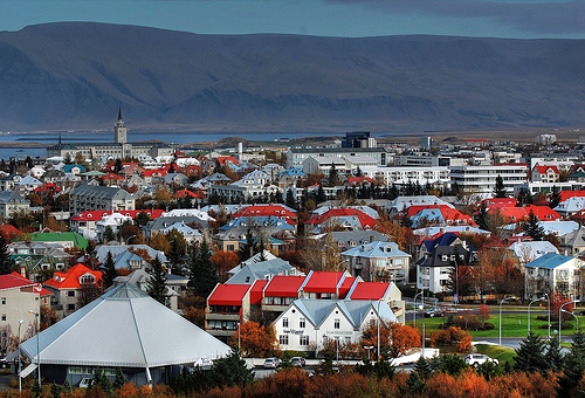
- Reykjavik and the capital area: The capital is home to the country's museums, restaurants and nightlife. The center, known by its postcode, 101, is compact and walkable. From Reykjavik you can visit many of the sights Iceland is famous for, including Geysir, Gullfoss and Thingvellir on the Golden Circle.
- The Reykjanes peninsula: Keflavík airport and the Blue Lagoon are here, and so is the most active volcanic area in the country right now. Nine eruptions hit the Sundhnúkur crater row near Grindavík between December 2023 and August 2025; the last ended on 5 August 2025. As of September 2026, Safetravel reports no active eruption, Grindavík is open, and walking on the new lava is forbidden, while the Icelandic Met Office says magma is still building up and another eruption could start with little warning. Check safetravel.is before you visit.
- West Iceland: North of Reykjavik, the west is a showcase of the country's geology, with craters, lava fields, waterfalls and glaciers. The Snaefellsnes peninsula packs a lot of it into a day trip.
- The Westfjords: In the far northwest, the Westfjords are one of the most sparsely populated parts of the country, at least when it comes to humans. Arctic foxes and seabirds outnumber people, and local legend once made it the home of sorcerers. Hornstrandir, at the very tip, has no roads at all.
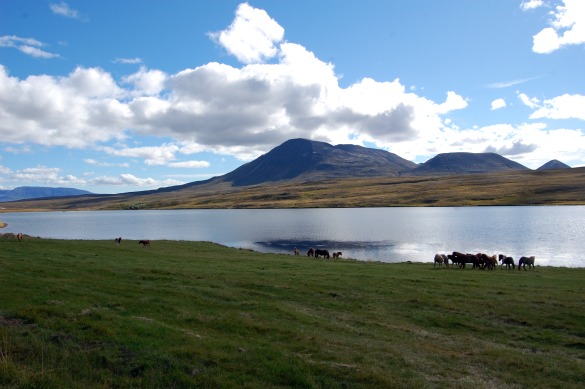
- North Iceland: The north is popular with hikers for its valleys and mountains, and it's home to Akureyri, Lake Mývatn and Húsavík, Iceland's whale-watching center. Horse farms, fishing and white-water rafting are all popular.
- East Iceland: The East Fjords are long, quiet and dotted with fishing villages, and the region is a long drive from Reykjavik, so fewer visitors make it this far.
- South Iceland: Stretching along the south coast, this is the land of black-sand beaches, waterfalls, volcanoes and geothermal springs. The Westman Islands lie just offshore, and the southeast includes the Skaftafell area of Vatnajökull National Park, at the foot of Vatnajökull, the largest ice mass in Iceland at about 7,600 square kilometers.
- The Highlands: Iceland's rugged, uninhabited interior is only open in summer. Safetravel says the highland F-roads are usually closed from mid-September until June or July, and you need a suitable 4x4 to drive them. The main north-south routes are Kjölur and Sprengisandur. Check umferdin.is to see which F-roads are open. See the Highlands.
Visas and entry
Iceland is a member of the Schengen Agreement. For EU, EEA and Swiss citizens, a passport is enough for entry. Many other nationalities, including citizens of the United States, Canada, the UK and Australia, can visit Schengen countries without a visa for up to 90 days in any 180-day period. Visitors from other countries need a Schengen visa. The Directorate of Immigration has a step-by-step check to see whether you need a visa, so use that rather than a list on a travel site.
Two EU border systems matter for non-EU visitors:
- The Entry/Exit System (EES) registers non-EU travelers' fingerprints and a photo at the border instead of stamping passports. It started on 12 October 2025, became fully operational on 10 April 2026, and Iceland is one of the countries using it. Allow a little extra time at passport control on your first trip.
- ETIAS, an online travel authorization for visa-exempt visitors, is not running yet, and there's no start date. The EU's official ETIAS site says it will announce the date several months before launch. It will cost €20 and be valid for three years, or until your passport expires if that comes first. Ignore websites that charge you to apply before then.
If you need help abroad, see our list of embassies in Iceland.
Money
The currency is the Icelandic króna (ISK, plural krónur). The króna crashed in 2008, and when this page was first written it traded at around 100 to 125 per US dollar. On 16 September 2026 the Central Bank of Iceland listed 121.18 ISK per US dollar and 139.80 ISK per euro, so the rate is back in a similar range. Prices are not; see costs and how to budget for a trip to Iceland.
Cards are accepted almost everywhere, including contactless payment on Reykjavik's city buses, and tipping isn't expected. See tipping in Iceland.
Sales tax and tax-free shopping
Iceland's standard VAT rate is 24%, and the reduced rate is 11%. The reduced rate covers hotels and guesthouses, campsites, restaurant food, alcohol, books, and passenger transport and tours, among other things. (The old version of this page quoted 24.5% and 7%.)
Visitors can get part of the VAT back on goods they take home. According to Iceland Revenue and Customs, it works like this:
- Ask for a Tax Free form when you buy, and keep the original receipt. A single receipt must be at least 12,000 ISK. The old minimum of 4,000 ISK is long gone.
- At Keflavík, get your forms export-stamped: by Change Group (signed as Prosegur Change at the airport) for refunds under 100,000 ISK, or by customs for larger amounts.
- Take the stamped forms and receipts to the International Refund Point at the airport.
More in tax-free shopping in Iceland.
Language
The official language is Icelandic, a North Germanic language related to Norwegian, Danish and Swedish, with deep roots in Old Norse. It's hard for most Westerners to learn. Luckily, English is taught in school and most people, especially in Reykjavik, speak it very well. You can get around fine without any Icelandic, but a "takk" (thanks) is always appreciated. See Icelandic language.
Electricity
Iceland uses the European standard: 50 Hz, with two-round-pin plugs (types C and F). Visit Reykjavík quotes 220 volts, and you'll also see the European 230V figure; either way, visitors from North America need a plug adapter and should check that their chargers handle it (most phone and laptop chargers do).
Phones and safety
The country code is +354, and the emergency number is 112. Iceland is shutting down its 2G and 3G networks, so Safetravel recommends saving 599-0112 as a backup emergency number in case a call to 112 won't connect or cuts out. Before heading out of town, check the weather forecast and road conditions, and if you're hiking or driving somewhere remote, leave a travel plan with Safetravel.
FAQ
Is Iceland part of the EU?
No. Iceland is in the European Economic Area and the Schengen area, so border rules follow Schengen, but it is not an EU member and it uses its own currency.
Do US citizens need a visa for Iceland?
Not for tourist stays of up to 90 days in any 180-day period across the Schengen area. You will be registered in the EES at the border, and once ETIAS starts you'll need that authorization before you fly.
Is Iceland safe to visit with the volcanic activity?
For most trips, yes. The recent eruptions have been on the Reykjanes peninsula near Grindavík, and the authorities close areas when there's a risk. Check safetravel.is and the Icelandic Met Office before you go. More on volcanoes in Iceland.
>> Next: when to go to Iceland, weather and packing for Iceland.
Photo by taivasalla