North Iceland
Updated · BootsnAll
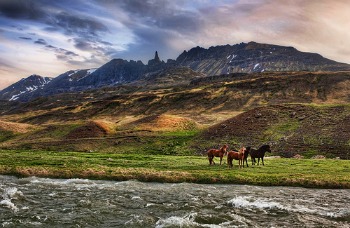
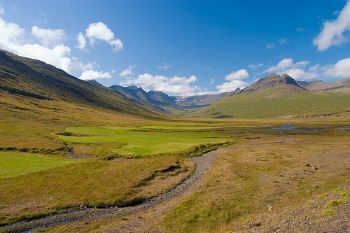 North Iceland is one of my favorite parts of the country. In a day you can go from coffee on the streets of Akureyri to a whale-watching boat in Húsavík, stand in the spray of Goðafoss, and end the evening in a geothermal lagoon. The region has fjords, snow-capped mountains, volcanic craters, some of Iceland's biggest waterfalls and a lot of quiet farmland, and it gets a fraction of the crowds you'll find on the south coast.
A few things have changed since I first wrote this. There are two new lagoons, the Mývatn baths have a new name, and you can now fly straight to Akureyri from Europe.
Getting to North Iceland
By car
Akureyri is about 388 km from Reykjavík on the Ring Road (Route 1), going by the Road Administration's distance tables. Plan on most of a day with stops. The road is paved all the way. In winter, check road conditions and the weather forecast before you set off, because the mountain passes between the capital and the north can close in storms. My tips on renting and driving are in car rental in Iceland and driving in Iceland, and there's more on the route in getting from Reykjavík to Akureyri.
East of Akureyri, the Vaðlaheiðargöng tunnel opened in December 2018 and cuts 16 km off the drive toward Húsavík and Mývatn. It's a toll tunnel, so ask your rental company how they handle the toll. (It's no longer the only tolled stretch of the Ring Road: a new section in Hornafjörður, in the southeast, started charging on 1 September 2026.)
By air
Icelandair flies Reykjavík to Akureyri several times a day, and the flight takes about an hour. Akureyri is also the only airport besides Keflavík with scheduled international flights. As of 2026, easyJet flies from London Gatwick and Manchester twice a week between October and April, and Edelweiss flies weekly from Zurich in summer. If you're coming from the UK in winter, you can skip Reykjavík entirely.
What to see
 Most of the big sights sit on or near the Diamond Circle, a 250 km loop that links five of them:
- Goðafoss, the "waterfall of the gods", right off the Ring Road between Akureyri and Mývatn. See my Goðafoss page.
- Lake Mývatn, with its pseudo-craters, lava formations and the steaming Námaskarð area nearby. More in Lake Mývatn.
- Dettifoss, which Vatnajökull National Park calls the most powerful waterfall in Europe. Go for the noise as much as the view.
- Ásbyrgi, a horseshoe-shaped canyon about 3.5 km long and 1.1 km wide, with birch woods on its floor, in the north of Vatnajökull National Park.
- Húsavík, the whale-watching town on Skjálfandi bay.
If you have more time and like empty roads, the Arctic Coast Way follows 900 km of coastal roads near the Arctic Circle. From the north you can also join a tour into the Highlands to see the Askja caldera, which is only reachable in summer.
Whale watching in Húsavík
Húsavík is one of the best places in Iceland to see whales, because several species feed in the bay. Local operators include North Sailing, which has been sailing since 1995, and Gentle Giants. Before or after the boat, spend an hour in the Húsavík Whale Museum by the harbor. The town also got a tourism bump after Netflix's Eurovision Song Contest: The Story of Fire Saga was set there in 2020.
For other trips, see tours in North Iceland and outdoor activities in Iceland.
Where to soak
North Iceland now has three proper lagoons, all cheaper and quieter than the Blue Lagoon. Prices are adult entry as of 2026.
- Forest Lagoon, in the woods 3.6 km from central Akureyri. Basic entry is 7,490 ISK, and it's open until midnight.
- Earth Lagoon Mývatn, the old Mývatn Nature Baths under a new name, with a rebuilt facility that opened in summer 2026. Entry from 7,900 ISK.
- GeoSea in Húsavík, with geothermally heated seawater and a view over the bay.
Smaller options include the beach hot tubs at Hauganes (1,000 ISK) and the Beer Spa near Akureyri, where you soak in a tub of beer, water, hops and yeast. See hot springs and swimming pools for the rest of the country.
Where to stay
You can stay at a full-service hotel in Akureyri, book a farmstay in the countryside, or camp in summer. My personal favorite is still the Kaldbaks-kot cottages (their site), which look over the bay and are 2 km from the center of Húsavík. They're open from mid-April to mid-October, according to Visit North Iceland. Self-catering works well up here. For budget options in town, see cheap hotels in Akureyri.
How long to spend
I'd give North Iceland at least three days: one to get there and see Akureyri, one for Húsavík and a whale trip, and one for Mývatn, Dettifoss and the other natural sights. With five to seven days you can add Ásbyrgi, a Highlands tour, the Arctic Coast Way or just a few slow mornings.
Don't try to squeeze in too much. The sights are close together, so it's tempting to race from one to the next, but much of the appeal is the landscape between them. Leave time for the detour that catches your eye.
Outside Akureyri, places to eat and sleep are limited, and in winter some close. Book ahead in summer, fill up the tank when you can, and keep snacks in the car. For itinerary ideas, see 10 days in Iceland and driving the Ring Road.
FAQ
Do I need a 4x4 in North Iceland?
Not for the Ring Road or the main sights in summer. In winter, a 4x4 with good tires is the safer choice, and for any Highland road (F-roads) it's required.
Is North Iceland worth it on a short trip?
With under five days, the flight to Akureyri makes it doable. If you're driving, three days in the north on top of your Reykjavík time is the minimum I'd suggest.
When is the best time to go?
June to August for long days, open roads and the best whale-watching. Winter brings northern lights and snow, but shorter days and some road closures. See when to go to Iceland and viewing the northern lights.
Photos by: Baked Beans, Stuck in Customs