Accommodation in Reykjavik
Updated · BootsnAll
Most of Iceland's beds are in Reykjavik, and most visitors spend at least a few nights here at the start or end of a trip. Some never leave. They base themselves in the city and head out on day tours to the Golden Circle, the south coast and the Reykjanes peninsula, then come back to a hot shower and a restaurant within walking distance.
Your choices run from dorm beds to four-star hotels, with a lot of guesthouses and apartments in between. None of it is cheap. The trick is picking the right neighborhood and knowing which extras actually save you money.
Where to stay: the neighborhoods
101, the city center
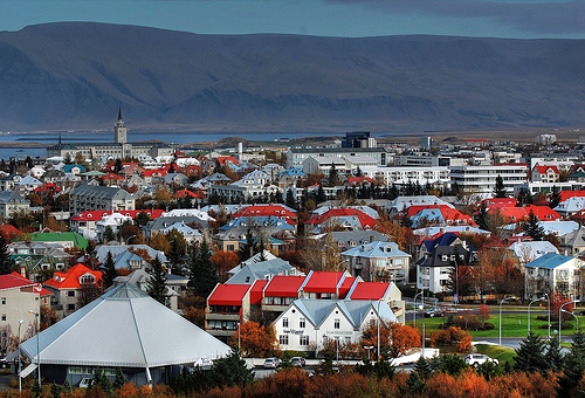
If it's your first trip, stay in 101 (the postcode for downtown). Nearly everything I'd send you to see is a short walk away: Hallgrímskirkja, the Old Harbour, Laugavegur, the Settlement Exhibition and the bars of the runtur. You'll pay more per night, but you won't be paying for taxis, and the city center is where you'll want to be at 11pm in June when it's still light out.
101 is big enough to have its own personalities. The streets around Laugavegur and Bankastræti are the liveliest, which is great until a Saturday night crowd is singing under your window at 3am. The quieter residential streets around Hallgrímskirkja, like Þórsgata and Njálsgata, are still only ten minutes from everything. The Old Harbour and Grandi area to the west has newer hotels and the Saga Museum on your doorstep.
Laugardalur
About 2 km east of the center, Laugardalur is the city's big green valley, with the largest pool, the Family Park and Zoo, the botanical garden and the city campsite. It suits families and anyone who'd rather swim every morning than bar-hop every night. The Dalur HI Hostel says the walk downtown along the waterfront takes about 25 minutes.
Further out
You'll find cheaper rooms in the suburbs and in neighboring towns like Kópavogur and Hafnarfjörður. It can work if you have a rental car. Without one, you'll spend a lot of your trip on the bus, and a single Strætó fare is 690 ISK as of January 2026. Do the math before you book.
Know this before you book: tour pickups
Tour buses aren't allowed onto many streets in central Reykjavik, so most day tours don't pick up at your hotel door. Instead, operators use numbered bus stops around the edge of downtown. Reykjavik Excursions, for example, uses 15 of them and says each is less than a 10-minute walk from downtown hotels. Look up your nearest stop when you book, and give yourself time to walk there in the dark with a suitcase if you're taking an airport bus.
The Flybus from Keflavík airport costs 3,999 ISK one way to the BSÍ bus terminal, or 5,299 ISK with an onward drop-off at (or near) your hotel. The cheaper option is Strætó route 55, at 2,400 ISK for adults. More in getting from Reykjavik to Keflavik.
Types of accommodation
Hostels
Hostels are the cheapest roof over your head, and in Reykjavik they're mostly clean, well run and social. HI Iceland runs two in the city. Loft, on Bankastræti 7, is right in the middle of the nightlife, with a bar and café, a guest kitchen and a rooftop terrace (they hand out free earplugs, which tells you something). Dalur, next to the Laugardalur pool, is the calmer, greener option with free parking. Both include bed linen and both have private rooms as well as dorms. Kids under 12 can't stay in the shared dorms. More in hostels in Reykjavik.
Guesthouses
If you usually book hotels, don't write off guesthouses. This is where I've gotten the best value in Reykjavik. Many have private bathrooms, and the ones with shared bathrooms are cheaper still. A guest kitchen alone can save you a small fortune when a restaurant main course costs what it does here.
Guesthouse Sunna, where I've stayed, is on Þórsgata right across from Hallgrímskirkja. It has 49 rooms and apartments, from basic rooms with shared bathrooms to one- and two-bedroom apartments, plus free parking on a first-come basis. Breakfast is extra, at 2,500 ISK as of 2026. There's no elevator, so ask for a lower floor if stairs are a problem.
Hotels
Full-service hotels are the most expensive option, and you may be surprised how small the rooms are for the price. Two with some history: Hotel Borg on Pósthússtræti was finished in 1930, is a four-star now, and has its own spa. The Berjaya Reykjavik Marina, next to the old dry dock on Mýrargata, is a good pick if you want to be near the harbor and Grandi. For more, see hotels in Reykjavik and what happened to the old Icelandair hotels.
Apartments
For families and groups staying more than a couple of nights, an apartment with a kitchen and a washing machine often beats two hotel rooms. See vacation rentals in Iceland and alternative accommodations for what to look for.
Camping
The Reykjavík Eco-Campsite at Sundlaugavegur 32, next to Laugardalslaug, is open all year for tents, campervans and caravans. It has a guest kitchen, showers, wifi and card-operated laundry. Stays are capped at 7 nights in any 30-day period, and they give 10% off for booking online.
How to get more for your money
- Go in the shoulder season. June through August is peak. Rates usually drop from mid-September through April, and May and late September can be a good balance of price and daylight. See when to go to Iceland.
- Count the freebies. Free breakfast, parking, wifi, a kitchen or laundry can be worth more than a lower room rate, especially free parking if you have a car.
- Book early for summer. The good-value places in 101 fill first.
- Swim instead of spa. A city pool costs 1,500 ISK for adults. Laugardalslaug is next door if you stay in Laugardalur.
For a sense of the whole trip's budget, see costs and how to budget for a trip to Iceland.
Staying near the airport instead
If you land very late or leave very early, a night near Keflavík can make sense. See Reykjavik airport hotels and hotels near the Blue Lagoon. Keep in mind that the Sundhnúkur crater row near Grindavík, on the Reykjanes peninsula, erupted nine times between December 2023 and August 2025, and roads and the Blue Lagoon have closed during eruptions. The Icelandic Met Office says magma is still building up there. Check Safetravel.is before you book anything out that way.
To see where everything is, open the map of Reykjavik.