Iceland in June
· Updated · BootsnAll
 Summers in Iceland are beautiful, and June is one of the most popular times to visit. Summer here is like few places on earth. It never really gets hot, and it barely gets dark. You can hike at 10pm under a bright sky, go riding at 5am, or drive all night in twilight.
It's also the start of high season, so book early and budget for it.
June weather
June is Reykjavik's driest month. The Icelandic Met Office's 1991-2020 averages show about 43 mm of precipitation over 9 days, a typical high of 13.0°C (55°F) and a typical low of 7.2°C (45°F). July and August are a little warmer. Reykjavik weather can still flip between sun and drizzle in an hour, so a waterproof layer stays in the bag.
The light: white nights and the midnight sun
The nearly endless daylight is the big draw. On 1 June the sun rises in Reykjavik around 3:25am and sets around 11:30pm. On the solstice, 21 June, it's up at about 2:55am and doesn't set until just after midnight, a little over 21 hours (Reykjavik sunrise and sunset times). In between, it only dips a little below the horizon, so the sky stays bright all night.
Strictly speaking, that's not the midnight sun. Most of Iceland sits just south of the Arctic Circle. Grímsey, the small island that straddles the circle, gets the sun above the horizon all night, and on paper so does the far northwest: in Ísafjörður the sun doesn't set from about 12 June to 1 July, though the steep mountains around town hide it. Elsewhere in the north it gets close: around the solstice in Akureyri, the sun is below the horizon for well under an hour.
Bring an eye mask if you're a light sleeper, and don't count on seeing the Northern Lights.
>> more on experiencing the midnight sun in Iceland
Things to do in June
The reason so many people visit in June (and July and August) is that the full range of outdoor activities is available, with time to do all of them.
- Puffins. June is the middle of puffin season. Elding runs puffin tours from Reykjavik from 20 April to 20 August, and North Sailing runs them from Húsavík between April and August. The Westman Islands are another good bet.
- Whales. Reykjavik tours run all year. From Húsavík, North Sailing lists humpback, minke, blue, fin, killer and sperm whales among the species seen in Skjálfandi Bay, with blue whales most regular early in the season.
- Hiking and camping. Low-level trails are clear, and you can walk late into the evening. See hiking in the Hengill area.
- Road trips. The Ring Road is at its easiest. See driving Iceland's Ring Road.
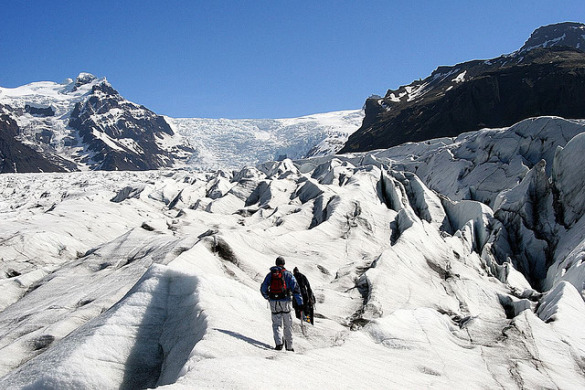
- Waterfalls, caves and glaciers. Guided glacier walks and cave tours run through the summer.
The highlands and Hornstrandir
June is when remote areas start opening, but don't assume they're open on your dates. Highland F-roads open in June or July depending on the snow, and some need a large 4x4. River crossings are dangerous, and Safetravel points out that no insurance covers damage from them. Check which roads are open on umferdin.is. In the Westfjords, the Hornstrandir nature reserve is reached by boat in summer; see how to get to Hornstrandir.
>> more on the Highlands and the Westfjords
Festivals and holidays in June
Seamen's Day
Sjómannadagurinn (Seamen's Day) is held on the first Sunday in June, or the Sunday after if that's Whit Sunday: 7 June in 2026 and 6 June in 2027. It honors fishermen and Iceland's fishing tradition, and harbor towns celebrate with parades, races, competitions and community gatherings.
National Day, 17 June
On 17 June Iceland celebrates the founding of the republic in 1944, a date chosen because it's the birthday of independence leader Jón Sigurðsson. Towns hold parades, often led by a brass band and riders on Icelandic horses, followed by speeches, then music and street parties. A highlight is the Fjallkonan (the Lady of the Mountain), a woman in national costume who recites a poem or gives a speech, a tradition in Reykjavik every 17 June since 1947. It's a public holiday, so expect closures.
Reykjavik Arts Festival
The Reykjavik Arts Festival is now held every other year. The 2026 edition ran from 30 May to 14 June, and the next one hasn't been announced yet, so check the festival site before you plan around it.
>> more on holidays and events in Iceland
What June costs
June is high season, so hotels, car rentals and tours charge summer rates, and the best-value places sell out first. Book your accommodation and car months ahead, especially outside Reykjavik where there are fewer beds.
For flights, Icelandair flies to Keflavik year-round, and summer is when you have the most choice: Delta, United, Alaska, Air Canada, WestJet and Air Transat all run seasonal flights there. PLAY no longer flies; it shut down in September 2025. Summer fares run higher than spring's, but they change too often to quote.
>> more on flights to Iceland and how to budget for Iceland
What to pack
It still gets cold, so bring a warm jacket and good boots and dress in layers. A hat, gloves and waterproof layer are worth packing for wet or windy days, along with a swimsuit and an eye mask.
>> more on what to wear in Iceland in summer
FAQ
Does it get dark in Iceland in June?
No. In Reykjavik the sun sets for only a few hours around the solstice, and the sky stays light the whole time. True midnight sun is limited to the far north, such as Grímsey and, around the solstice, the Ísafjörður area.
Are the highlands open in June?
Some roads open in June and many don't open until July. It depends on the year's snow, so check umferdin.is close to your trip. If the highlands are your priority, July or August is safer. See Iceland in July.
Is the Blue Lagoon affected by the eruptions?
It has been. The lagoon is near Grindavík, where the Sundhnúkur crater row erupted nine times between December 2023 and August 2025, and it has closed temporarily during several eruptions. The Icelandic Met Office reported continuing uplift there in September 2026. Check Safetravel before you go.
Photo by Helder Caixinha