Accommodation
Updated · BootsnAll
 Updated September 2026
Iceland has everything from dorm beds and farm guesthouses to design hotels with price tags to match. What it doesn't have is much slack. Just under 2.3 million foreign visitors stayed overnight in 2025, in a country of 396,500 people, so rooms fill up in a way they didn't when this guide was first written. The old advice about rolling into Reykjavik in winter without a booking no longer holds. Book ahead, whatever the season.
A few things haven't changed. Rooms tend to be smaller than in the US, and at mid-range places a "double bed" is often two singles pushed together. And if you're on a budget, a room with access to a kitchen is still the biggest money-saver in the country, because eating out is where Iceland really gets you.
Where to base yourself
Reykjavik
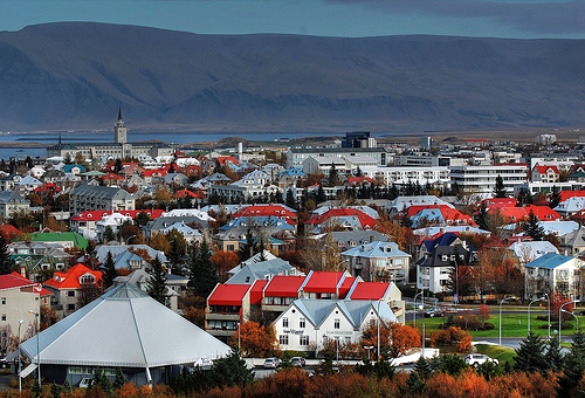
Most of your choices are in Reykjavik and the towns around it, where 253,230 of Iceland's residents live. If you don't have a car, stay in or near the 101 postcode, the old center. You can walk to most restaurants, bars, pools and museums, and the Flybus from the airport runs to the BSÍ bus terminal, with drop-offs at central bus stops and hotels (the hotel drop-off may cost extra). If you're picking up a rental car, a place slightly outside the center with free parking can save you money and hassle.
For specific places, see our pages on accommodation in Reykjavik, hotels in Reykjavik and hostels in Reykjavik.
Outside the capital
Once you leave the city, lodging falls into a few groups: country hotels (some very upscale), family-run guesthouses, farm stays, and self-catering cottages. Towns like Akureyri and Húsavík have a decent spread of mid-range options. The further you get from the Ring Road, the fewer the choices, and many small places have only a handful of rooms.
Book rural accommodation before you leave home, and plan your route around it. In summer the small places sell out. In winter some close for the season, and the ones that stay open may be a long, dark drive from the next option. You don't want to get left out in the cold in rural Iceland.
Your options, from cheapest up
Camping
Campsites are the cheapest roof-over-your-head option, if a tent counts as a roof. The Reykjavík Eco-Campsite, about 2 km from the center, is open all year and charges 3,555 ISK for a tent pitch with one adult in 2026 (with the online discount), plus a 400 ISK lodging tax per unit per night. If you'll camp a lot, the Camping Card cost 179 euros in 2026 and covers up to 28 nights at dozens of partner campsites for two adults and up to four children under 16. It expires on September 15 each year, and the lodging tax is not included. The rules on wild camping and campervans changed in 2015, so read our page on alternative accommodations before you plan to sleep anywhere that isn't a campsite.
Mountain huts
Hikers can sleep in huts run by Ferðafélag Íslands (the Iceland Touring Association) and a few other groups. You need to book and pay in advance; without a confirmed booking, there's no guarantee of a bed. A sleeping-bag space at the Álftavatn hut on the Laugavegur trail is listed at 17,000 ISK a night. The highland huts only open once the roads do, which depends on snow, so check before you commit to dates. Bring your own sleeping bag.
Hostels
Hostels are still the best bet for budget travelers. You'll meet other travelers, and almost all have a shared kitchen. HI Iceland lists 17 hostels in 2026, down from the 30-plus it had when this page was first written. Two are in Reykjavik: Loft, which has a bar and hosts events, and Dalur, a quieter family-friendly hostel with a café in the Laugardalur area. The rest are spread around the country, from Vík and Höfn in the south to Seyðisfjörður in the east and Korpudalur in the Westfjords. Dorm beds cost more than the 3,000 ISK this page used to quote: for mid-October 2026 dates, a dorm bed at Dalur was 4,000 to 5,150 ISK a night and at Loft 5,000 to 5,900 ISK, plus lodging tax. See our Reykjavik hostels page for more. There are plenty of independent hostels too; see our hostels page.
Guesthouses and farm stays
Guesthouses are the backbone of rural Iceland. Expect a simple room, often with a shared bathroom, and sometimes breakfast. Farm stays are the rural version, and Hey Iceland (formerly Icelandic Farm Holidays) books farm stays, guesthouses, cottages and sleeping-bag accommodation around the country, and can build a self-drive route around them.
Hotels
Full-service hotels are concentrated in Reykjavik, Akureyri and along the south coast. If you want something special, look at our pages on romantic hotels in Iceland and luxury hotels in Iceland.
Apartments and cottages
Renting an apartment or summer cottage works well for families and groups who want to cook. See vacation rentals in Iceland and self-catering in Iceland.
Realities to plan around
- Taxes. Accommodation carries Iceland's reduced VAT rate of 11%, and prices you see are normally quoted with it. On top of that there's a lodging tax of 800 ISK per room or unit per night at hotels and guesthouses and 400 ISK at campsites, as of 2026. Many places add it to the bill when you arrive, so it may not be in the price you booked.
- Near the airport and the Blue Lagoon. The Reykjanes peninsula has erupted repeatedly since 2023, near Grindavík and the Blue Lagoon. As of September 2026 no eruption is active and Grindavík is open, but the area is still considered hazardous and the Icelandic Met Office says magma is still building up. If you book near there, check safetravel.is before you travel. See hotels near the Blue Lagoon and airport hotels.
- Winter closures. Plenty of rural places close from autumn to spring. If a town on your route has only one guesthouse open, book it early.
- Cancellation terms. Weather and road closures can wreck a driving itinerary. Flexible rates cost a bit more and are often worth it. Check road conditions before each day's drive.
FAQ
Do I need to book accommodation in advance in Iceland?
Yes. With tourist numbers where they are, both summer and the winter northern-lights season get busy, and small rural places have few rooms. Reykjavik has the most beds, so it's the one place where a late booking is usually still possible.
Where should I stay on a Ring Road trip?
Plan your nights around driving times, not distances, and allow for weather. Our Ring Road guide and 10-day itinerary will help you pick overnight stops. In the Westfjords, see where to stay in the Westfjords.
What is sleeping-bag accommodation?
It's a cheaper rate at some guesthouses, farms and huts where you get a bed but bring your own bedding. It's more common outside Reykjavik, and it's worth asking about if you're traveling with a sleeping bag anyway.
>> For camping, campervans and Couchsurfing, see alternative accommodation options. For budgeting, see how to budget for a trip to Iceland.
Photo by Alex J White