Iceland in July
· Updated · BootsnAll
 It's no surprise that July, along with June and August, is one of the most popular times to visit Iceland. It's the warmest month, the days are still very long, and July is when the highlands are most reliably open. Prices are at their highest and the famous stops are at their busiest, but outside Reykjavik and the Golden Circle, the word "crowd" is still a bit of an overstatement.
July weather
July is Reykjavik's warmest month, but "warm" is relative. The Icelandic Met Office's 1991-2020 averages put the typical high at 14.9°C (59°F) and the low at 9.1°C (48°F). Precipitation averages about 50 mm over 10 days, a little more than June. By North American summer standards it's chilly, so pack like you're going to the mountains, not the beach.
Daylight
On 1 July the sun rises in Reykjavik around 3:05am and sets just before midnight, nearly 21 hours. By 31 July it rises around 4:30am and sets around 10:35pm, about 18 hours (Reykjavik sunrise and sunset times). Early in the month the sky never gets properly dark. Instead of cramming everything into a few hours of winter daylight, you can go from 6am to 11pm hiking, riding, snorkeling and driving.
>> more on experiencing the midnight sun
Things to do in July
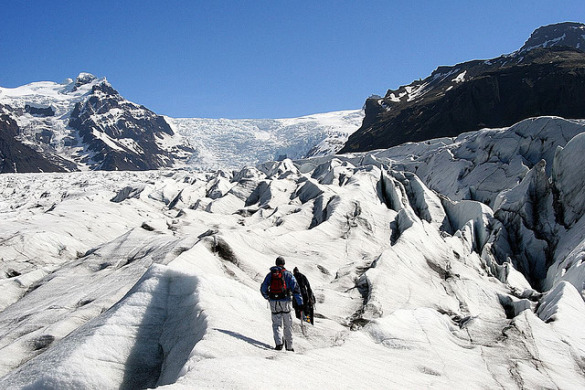
Head into the highlands
This is the month most people pick for the interior. Highland F-roads open in June or July and close again in mid-September, so by July most are usually passable. Safetravel's advice is worth reading in full: some F-roads are fine for a small 4x4, others need a big one or a modified superjeep, and no insurance covers damage from river crossings. If a crossing looks doubtful, don't do it. Check road status on umferdin.is and leave a travel plan with Safetravel.
If you'd rather not drive it yourself, look at a guided tour. See the Highlands and bus travel in Iceland.
Hornstrandir and the Westfjords
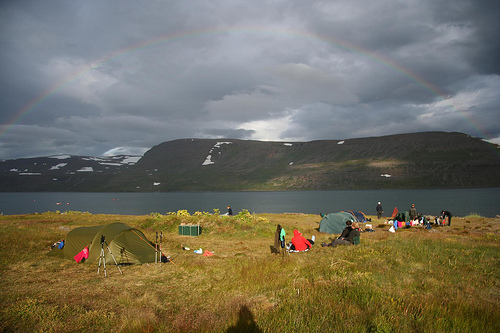
The remote Hornstrandir reserve in the Westfjords has no roads and is reached by boat from Ísafjörður in summer. Sjóferðir is one operator that runs boats around Hornstrandir and Jökulfirðir. Plan it with how to get to Hornstrandir and where to stay in the Westfjords.
Puffins and whales
July is well inside puffin season: Elding's puffin tours from Reykjavik run 20 April to 20 August. Whale watching runs from Reykjavik all year, and from Húsavík, North Sailing lists humpbacks, minkes, blue whales, fin whales, orcas and sperm whales among the species seen in Skjálfandi Bay.
The classics, earlier or later
Gullfoss, Geysir, Seljalandsfoss and the black sand beaches near Vík are busiest in the middle of the day. With this much light, you can visit them at 8am or 9pm and have a far better time. If you go to Reynisfjara, read Safetravel's black beach safety advice first: the waves there are dangerous.
>> more on outdoor activities in Iceland and driving the Ring Road
Festivals
July is quieter for big events than June or August, but it runs straight into the biggest weekend of the Icelandic summer. Þjóðhátíð, the festival on Heimaey in the Westman Islands, takes place on the weekend before the first Monday in August, which puts it at the very end of July in 2027. It has concerts, bonfires, fireworks and a Sunday night sing-along, and it drew about 15,000 people on the Sunday in 2022. The 2027 festival runs 29 July to 2 August. If you want to go, book your transport to the islands early. More in Iceland in August.
>> more on holidays and events in Iceland
What July costs
Summer is the most expensive time to visit Iceland. High-season rates apply at hotels, guesthouses and car rental desks, and the cheapest options go first. Book rooms and cars as early as you can, especially in small towns along the Ring Road where there aren't many beds. Camping and self-catering help keep costs down.
Flights are at their priciest, but you also have the most options. Icelandair flies to Keflavik all year, and in summer Delta, United, Alaska, Air Canada, WestJet and Air Transat add seasonal flights. PLAY ceased operations in September 2025. Fares change constantly, so compare a few dates.
>> more on flights to Iceland and budgeting for Iceland
What to pack
Icelanders spend lots of time outdoors in summer, hiking and camping, but they dress for it. Bring a warm jacket, good waterproof boots and layers for changing temperatures, plus a rain shell, a hat and light gloves for the highlands. An eye mask helps you sleep.
>> more on what to wear in Iceland in summer
FAQ
Is July the best month to visit Iceland?
For the highlands, long hikes and the warmest weather, yes. For value, late May, early June or September are better. See when to go to Iceland.
Can I see the Northern Lights in July?
No. The sky doesn't get dark enough. The aurora season starts again as nights darken in late August and September.
Should I worry about volcanoes?
Check before you go. On the Reykjanes peninsula near Grindavík and the Blue Lagoon, the Sundhnúkur crater row erupted nine times between December 2023 and August 2025, the last from 16 July to 5 August 2025, and the Icelandic Met Office reported in September 2026 that magma is still building up. The Blue Lagoon has closed temporarily during eruptions. Safetravel's Reykjanes page has the current situation. See also volcanoes in Iceland.
Photo by bjarnit