Iceland in January
· Updated · BootsnAll
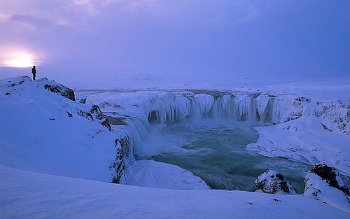 Once the New Year's fireworks are swept up, Iceland goes quiet. January is one of the least popular months to visit, and that's the best argument for it: rooms and rental cars are cheaper, the Golden Circle car parks are half empty, and the long nights give you plenty of chances at the Northern Lights.
What you give up is daylight and predictability. Gales and snowstorms are common, and you should build a spare day into any plan that involves driving.
January weather
Reykjavik's January isn't much colder than New York's or Chicago's. Using the Icelandic Met Office's 1991-2020 averages, the typical high is 3.2°C (38°F) and the typical low is -1.7°C (29°F). Expect rain or snow on about 15 days of the month (around 87 mm in total), and very little sun: the monthly average is about 23 hours of sunshine.
Those are averages, and single Januaries vary a lot. The Met Office's monthly records show a low of -14.0°C in Reykjavik in January 2024, while January 2026 was unusually dry, with only about 27 mm of precipitation. The wind is what you'll notice most. A 3°C day with a strong gust off the sea feels far colder than the number.
Daylight in January
You gain daylight fast. On 1 January the sun rises around 11:20am and sets around 3:45pm, about four and a half hours. By 31 January it's up at about 10:10am and down around 5:10pm, about seven hours (Reykjavik sunrise and sunset times). A trip at the end of the month feels noticeably roomier than one at the start.
Things to do in January
Despite the cold, short days, there are still lots of things to do in Iceland in winter.
- Chase the Northern Lights. Long, dark nights make January a strong month for the aurora, as long as the sky clears. The Met Office aurora forecast maps cloud cover and activity together. More in viewing the Northern Lights in Iceland.
- Drive the Golden Circle. The main roads in southwest Iceland are usually kept clear, and Þingvellir, Geysir and Gullfoss are open all winter. See exploring the Golden Circle.
- Snorkel Silfra. The water in the Þingvellir fissure stays at 2-4°C all year. You wear a drysuit, and it's warmer inside it than you'd think.
- Go horseback riding. Icelandic horses are built for this weather, and stables near Reykjavik ride in winter too.
- Whale watching. Elding sails from Reykjavik's Old Harbour all year.
- Soak like a local. The city pools are where Reykjavik spends its winter evenings.
Pack your best cold weather gear and you'll stay comfortable walking around Reykjavik as well. Remote areas are another story: the highland F-roads are closed from mid-September until summer, and parts of the north and east can be hard to reach after a storm.
If the Blue Lagoon is on your list
The Blue Lagoon is near Grindavík on the Reykjanes peninsula, where the Sundhnúkur crater row erupted nine times between December 2023 and August 2025. The lagoon has closed temporarily several times because of it. The latest eruption ended in August 2025, but the Icelandic Met Office reported in September 2026 that magma is still accumulating. Check Safetravel before you book and again the day you go.
>> more on the Blue Lagoon and hot spring pools in Reykjavik
Getting around safely
Rent a car with winter tires, check umferdin.is for road conditions each morning (or call 1777), and read the alerts on Safetravel. If a storm is forecast, don't drive. A guided day tour from Reykjavik is a sensible alternative if you'd rather not deal with icy roads yourself.
>> more on driving in Iceland and day tours from Reykjavik
What January costs
The trade-off for colder days and less daylight is fewer tourists and lower prices. Hotels and car rentals drop to low-season rates once the holidays are over, and January is often one of the cheapest months to fly.
Fares change weekly, so check them yourself rather than trusting a number on a web page. Icelandair flies to Keflavik year-round, as does United from Chicago, but most other US and Canadian airlines only fly there in their summer season, so in January you'll have fewer nonstop choices. PLAY, which used to undercut everyone, shut down in September 2025.
>> more on flights to Iceland and costs in Iceland
Holidays and festivals
Twelfth Night
Christmas in Iceland doesn't end until 6 January, Þrettándinn, when the last of the thirteen Yule Lads heads back to the mountains. Towns light bonfires and set off the last of the fireworks. In 2026, the City of Reykjavik held its Twelfth Night bonfire at Gufunesbær, with Yule Lads in attendance, and Hafnarfjörður and Mosfellsbær held their own.
Þorrablót
Mid-January is also a festive time to be in Iceland. Þorri, a month in the old Icelandic calendar, runs from mid-January to mid-February, and the midwinter feasts held during it are called Þorrablót. The month starts on a Friday called bóndadagur (farmer's day), which falls on 22 January in 2027.
Today's Þorrablót ranges from a dinner with friends to big community parties with speeches, poems, songs and a dance afterward. The food is the famous part: slátur (the Icelandic version of haggis), boiled sheep's head, fermented shark, soured ram's testicles, and plenty of brennivín to wash it down. Many Reykjavik restaurants serve a Þorri platter during the month if you want to try it without an invitation.
>> more on Icelandic delicacies and holidays and events in Iceland
Stay into February
If your dates are flexible, push the trip into the first week of February for Reykjavik's free Winter Lights Festival, which runs 4-7 February in 2027. See Iceland in February.
What to pack
A windproof, waterproof outer layer matters more than a heavy parka. Add wool base layers, a warm hat, gloves, waterproof boots with good grip (or slip-on ice cleats), and a swimsuit for the pools.
>> more on what to wear in Iceland in winter
FAQ
Is January too cold to visit Iceland?
Not for most people. Reykjavik averages around freezing, which is milder than many northern US cities. The hard parts are wind, ice and short days, not extreme cold.
Is January good for the Northern Lights?
It's one of the better months because the nights are so long. Clear skies are the limiting factor, so give yourself several nights and stay flexible.
Can I drive the Ring Road in January?
You can try, but storms close sections regularly, especially in the north and east. Allow extra days and check conditions daily. If you're on a tight schedule, stick to the south and west. See driving Iceland's Ring Road.
Photo by Trodel