Iceland in February
· Updated · BootsnAll
 February is still deep winter in Iceland, but it's a better month to visit than its reputation suggests. The days get about three hours longer between the 1st and the 28th, Reykjavik throws a free light festival, and there's a run of eating holidays that ends with children in costumes singing for candy.
It's also low season, so you'll share the waterfalls with fewer people and pay less for a room.
February weather and daylight
On paper, February is Reykjavik's coldest month. The Icelandic Met Office's 1991-2020 averages give a mean of about 0.5°C, with a typical high of 3.3°C (38°F) and a low of -1.9°C (29°F). Rain or snow falls on about 15 days, adding up to around 91 mm, and the city averages about 62 hours of sunshine for the month, nearly three times January's.
The averages hide big swings. According to the Met Office's monthly records, February 2025 averaged 3.1°C in Reykjavik and was very wet (about 142 mm), while February 2026 averaged -0.8°C, had only about 33 mm of precipitation and more than 100 hours of sun. Come ready for slush or for crisp, clear cold.
Daylight grows quickly. On 1 February the sun rises around 10:10am and sets around 5:15pm, about seven hours. By 28 February it's up at about 8:40am and down around 6:40pm, a full ten hours (Reykjavik sunrise and sunset times). The nights are still long and dark enough for the Northern Lights.
Things to do in February
Even though the days are cold, you'll find plenty of things to do in Iceland in winter to fill the daylight hours. Most attractions and main roads in southwest Iceland stay open.
- Northern Lights. February combines long nights with more daylight for sightseeing, which makes it one of the easier winter months for an aurora trip. Watch the Met Office aurora forecast and read our guide to viewing the Northern Lights.
- The Golden Circle and the south coast. Ten hours of light by late February is enough to reach Vík and back. See exploring the Golden Circle and traveling to Vik from Reykjavik.
- Whale watching. Elding's classic tour leaves Reykjavik's Old Harbour year-round.
- Snorkeling Silfra. The water is 2-4°C in any month, so February is no worse than August once you're in the drysuit.
- Pools and lagoons. See hot spring pools in Reykjavik.
If you're thinking about the Blue Lagoon, know that it's close to Grindavík, where the Sundhnúkur crater row erupted nine times between December 2023 and August 2025, and the lagoon has closed for several of them. No eruption has happened since August 2025, but the Icelandic Met Office says magma is still building up. Check Safetravel's Reykjanes page before you go.
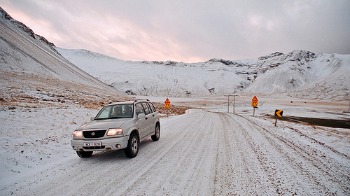
Driving: rent a car with winter tires, check umferdin.is every morning, and don't set out into a storm warning. The highland roads stay closed until summer.
>> more on driving in Iceland
Festivals and holidays
Winter Lights Festival
Reykjavik's Winter Lights Festival fills the capital area with light art for four days in early February. There are more than 150 events, including Museum Night and Pool Night, and all of them are free. The 2026 festival ran 5-8 February, and the 2027 edition is set for 4-7 February across all six municipalities of the capital area.
The end of Þorri
The old Icelandic month of Þorri runs from mid-January to mid-February, so the Þorrablót season of midwinter feasts is still going in early February. Community halls host dinners with speeches, poems and dancing, and restaurants serve Þorri platters with fermented shark, sheep's head, slátur, soured ram's testicles and other traditional Icelandic delicacies. Try the shark with a shot of brennivín. It helps.
Bun Day, Bursting Day and Ash Wednesday
The three days before Lent are some of the most fun in the Icelandic calendar, and they usually land in February. On Bolludagur (Bun Day, the Monday), children decorate a stick with colored paper and use it to spank their parents out of bed, demanding cream buns. Bakeries sell buns filled with cream and jam and topped with chocolate, and they sell a lot of them.
The next day is Sprengidagur (Bursting Day), when people eat salted lamb and split pea soup until they can't move. On Öskudagur (Ash Wednesday), kids dress up in costumes and go around shops and businesses singing for candy.
The dates move with Easter. In 2027, Bun Day is 8 February, Bursting Day 9 February and Ash Wednesday 10 February. (In 2026 they fell on 16-18 February.)
Food & Fun
At the end of the month, the Food & Fun Festival pairs guest chefs with about 20 Reykjavik restaurants, which serve special menus while it runs. The 2026 festival ran 25 February to 1 March. More in Iceland in March.
>> more on holidays and events in Iceland
What February costs
The main benefits of visiting in winter are fewer tourists and lower prices on hotels, car rentals and many tours. Book ahead anyway: some guesthouses and smaller operators outside Reykjavik close for the winter.
For flights, Icelandair flies to Keflavik all year, while most US and Canadian airlines serving Iceland only fly in their summer season. The exception is United, which flies from Chicago all year. PLAY stopped flying in September 2025. Fares move too fast to quote, so compare a few dates before you commit.
>> more on flights to Iceland and budgeting for Iceland
What to pack
You'll need extra cold-weather gear, but if you dress properly the temperatures feel a lot like winter in the northern US. A windproof and waterproof shell, warm layers underneath, a hat and gloves, boots with grip, and a swimsuit.
>> more on what to wear in Iceland in winter
FAQ
Is February better than January for visiting Iceland?
For most people, yes. You get roughly three more hours of daylight than on the same date in January, the Winter Lights Festival, and nights that are still long enough for the aurora. The weather is about the same.
When is Bun Day in Iceland?
It's the Monday before Ash Wednesday, so it moves with Easter: 8 February in 2027. Look for cream buns in every bakery the weekend before.
Can I see the Northern Lights in February?
Yes, February is a good month for them. You need a clear, dark sky and some luck with solar activity, so plan at least a few nights and check the forecast each afternoon.
Photo by fiamh