
What to Eat in Iceland: Famous Icelandic Foods
· Updated · BootsnAll
In the early days of settlement, Icelanders had to make do with whatever they could scrape from an unforgiving land and a frigid sea. They had to be creative: fish was dried, meat was smoked or soured, and shark was left to ferment until it was safe to eat. Modern Iceland imports food from all over the world, but some of its most famous dishes still follow those old recipes.
You can find sushi, Indian and Italian food in Reykjavik, but it would be a shame to leave without trying at least a few of these. Here's what to order, and where. For the full picture, start at our Icelandic food section.
Plokkfiskur
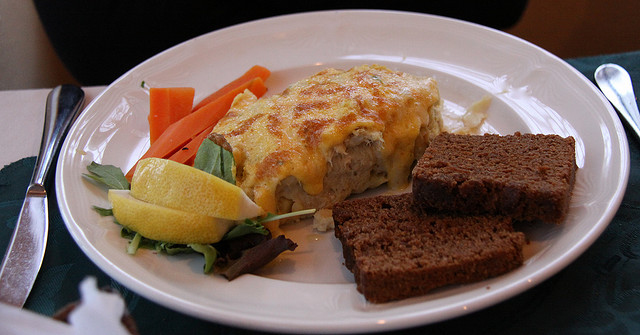
Plokkfiskur is a traditional fish stew and one of my personal favorite things to eat. It's rich and filling, perfect for cold, dark days, and it started as a clever way to turn leftover fish into something good. The name means "mashed fish," and that's pretty much what it is, but mashed in the most appetizing way. Boiled haddock or cod is flaked and mixed with boiled potatoes and a white sauce of onion, butter, flour and milk. Some cooks add a little curry powder, and many top it with cheese and put it under the grill until it browns. It's served with dark rye bread and butter.
Where to try it: Þrír Frakkar serves a gratinated version with rye bread for 3,890 ISK, and Kaffi Loki, across from Hallgrímskirkja, serves it on rye bread as part of its Icelandic plates (as of 2026).
>> more on plokkfiskur
Lamb
Icelandic sheep roam free all summer, and lamb is the country's staple meat. You'll find it roasted, smoked (hangikjöt, the Christmas classic) and in kjötsúpa, a hearty lamb and root vegetable soup that's the best 4,850 ISK you'll spend on a cold day at Kaffi Loki. For a smarter dinner, Grillmarkaðurinn grills rack of lamb over charcoal. See Christmas in Iceland for the holiday version.
Skyr
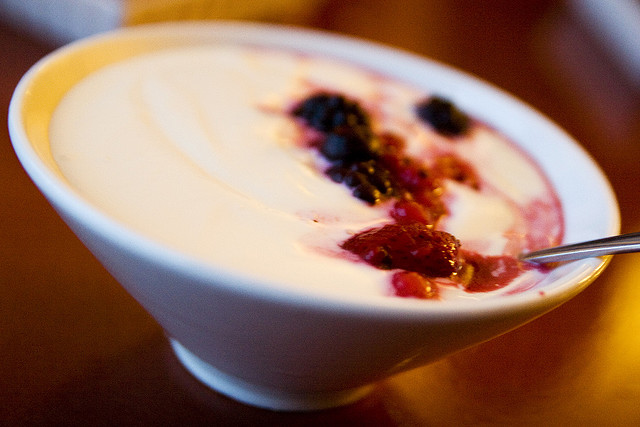
Skyr is a fresh cultured dairy product that is technically a soft cheese, but it looks and tastes like a thick yogurt. It's high in protein and almost fat-free: plain Ísey skyr has 11 g of protein and 0.2 g of fat per 100 g. It shows up in the sagas, so Icelanders have been eating it for a very long time. You'll find it in every grocery and convenience store and in some form on almost every traditional menu. Eat it plain, topped with berries, blended into smoothies or baked into desserts. Try it the old way, with cream and sugar, at Kaffi Loki, or as skyr cake.
>> more on skyr
Rye bread from the ground
Rúgbrauð is a dense, dark, slightly sweet rye bread, and Icelanders have long used geothermal heat to bake it. You can see this for yourself at Laugarvatn Fontana on the Golden Circle, where the geothermal bakery tour shows how they bake rye bread in the hot ground by the lake and lets you taste it while it's still warm. From June to September, tours run daily at 10:15, 11:45 and 14:30. Fontana reopened on 1 August 2026 after a full renovation. Back in Reykjavik, Kaffi Loki turns rye bread into ice cream (1,600 ISK), and it's better than it sounds.
Hákarl
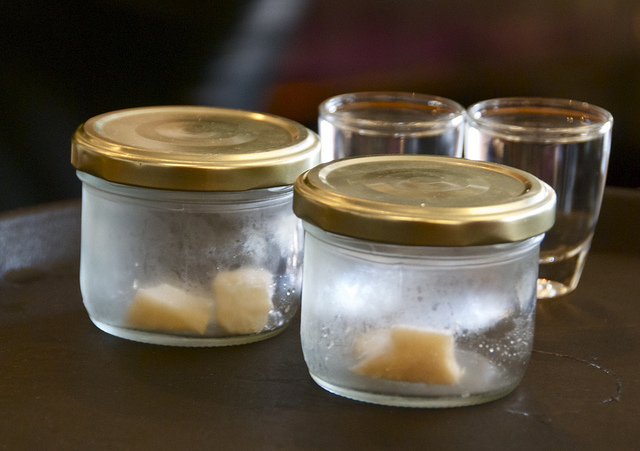
Hákarl, fermented Greenland shark, is not for the faint of stomach. Fresh Greenland shark meat is considered toxic, so it has to be cured first. The shark is fermented for six to twelve weeks while the fluids drain out (traditionally in gravel pits by the sea, today mostly indoors in perforated containers), then cut into strips and hung to dry for several weeks to months. The ammonia smell is worse than the taste, but not by much. That's why most people eat it in small cubes chased with a shot of Brennivín. Anthony Bourdain called it the single worst, most disgusting and terrible-tasting thing he'd ever eaten.
Where to try it: Kaffi Loki's "Must try" tasting is fermented shark with a Brennivín shot for 2,900 ISK, and Þrír Frakkar has it as a starter. If you're driving the Snæfellsnes Peninsula, the Bjarnarhöfn Shark Museum, about 25 minutes from Stykkishólmur, shows you the traditional curing sheds and gives you a taste. Entry is 2,200 ISK for adults (as of 2026).
Whale and puffin
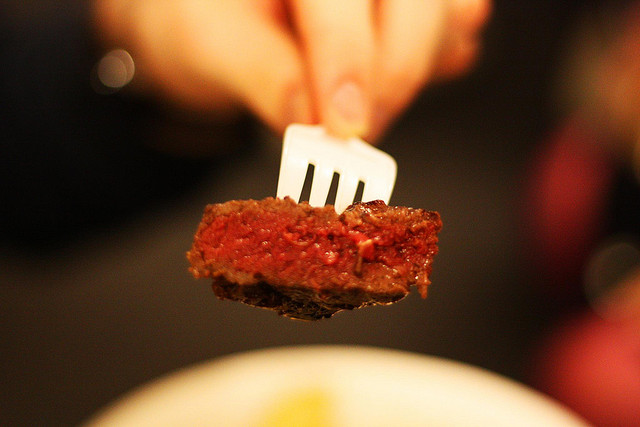
Both still appear on menus, and both are controversial.
Whale. The minke whale that used to be on so many tourist menus came from a single company that hunted minke for the domestic market, and it stopped in 2020; a single minke was taken in 2021, and there was no minke hunt in 2026. Iceland's remaining whaling company, Hvalur hf., hunts fin whales, largely for export to Japan. After two years without a hunt it went back out in June 2026 and had caught 80 fin whales by 9 September, against an advised limit of 150. The government's legislative plan puts a bill overhauling the whaling law before parliament in February 2027, with a permanent ban under consideration. Some restaurants still serve whale: Þrír Frakkar's menu lists a fin whale pepper steak.
Puffin is served smoked or grilled. You'll find it at Grillmarkaðurinn and in Tapas Barinn's Icelandic menu. Lamb is the staple red meat, but horse (foal) is also common on menus, and reindeer shows up in season.
>> more on Icelandic delicacies
Hot dogs
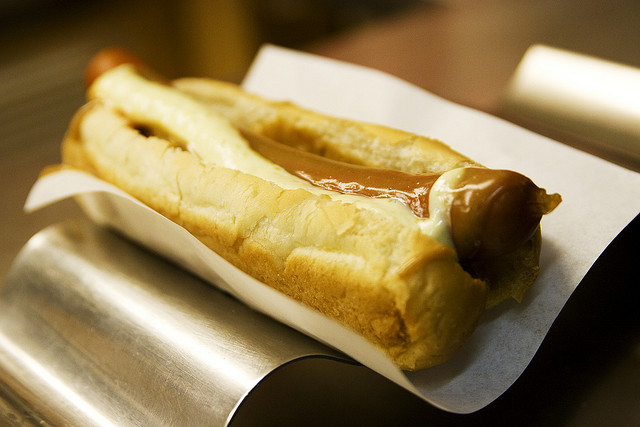
The hot dog may not be a traditional Icelandic food, but it's a famous one. Icelandic hot dogs are a blend of lamb, pork and beef. Order one eina með öllu ("one with everything") and you get ketchup, sweet mustard, remoulade, crispy fried onion and raw onion. You'll find them at gas stations all over the country, but the famous place is Bæjarins Beztu Pylsur, a stand that has been open since 1937 and now sits on Tryggvagata. It's the traditional last stop on the rúntur.
Þorramatur
If you're in Iceland between late January and late February, the old month of Þorri, you'll see þorramatur in supermarkets and at Þorrablót feasts. This is the old preserved food all in one place, from hákarl to dried fish (harðfiskur). You can try the gentler end of it all year round at Kaffi Loki, which serves dried fish with butter and sheep's head jelly on flatbread. See Iceland in January and Iceland in February if you're timing a trip for it.
Where to eat it all
For one-stop sampling, Kaffi Loki (Lokastígur 28) is open every day from 8:00 to 22:00, with no reservations. Its Icelandic plates bundle rye bread, plokkfiskur, smoked trout, dried fish and a taste of shark for about 5,000 to 5,500 ISK. For a sit-down dinner, Tapas Barinn's seven-course Icelandic Gourmet Feast covers puffin, Arctic char, foal, lobster and lamb in one evening.
More on food and drink in Iceland:
- where to eat in Reykjavik
- dining on a budget in Reykjavik
- romantic restaurants in Reykjavik
- the best restaurants for a splurge meal in Reykjavik
- cafes in Reykjavik
- self-catering in Iceland
- what to drink in Iceland
- dining and drinking in Reykjavik
Photos by: ChrisGoldNY, Jim Purbick, roboppy, reutC, roboppy