Iceland in Winter
· Updated · BootsnAll
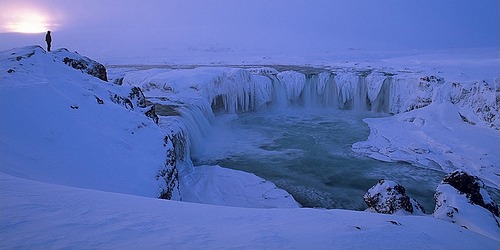 When you think of winter in a place called Iceland, you probably picture ice, and lots of it: frozen lakes, giant snowbanks, blizzards, impassable roads. Iceland does deliver some of that. It's still a fantastic place to visit in winter, and it isn't nearly as cold as the name suggests.
How cold and how dark?
Winter days are short and chilly, but this isn't Siberia. The Icelandic Met Office's 1991-2020 records for Reykjavik put the average high at about 3°C (38°F) and the average low at about -2°C (29°F) in December, January and February. That's close to New York City's January averages (39.5°F high, 27.9°F low in Central Park, according to the National Weather Service). When I visited for the first time, I went in March and found it was warmer in Reykjavik than back home in Chicago.
What makes Icelandic winter hard is the wind, the constant switching between snow, sleet and rain, and the dark. The north is colder and snowier than Reykjavik, and the weather can close mountain roads for a day or more.
Here's how the daylight looks in Reykjavik (Iceland doesn't change its clocks, so these hold year to year):
- December 21: sunrise around 11:20am, sunset around 3:30pm, about 4 hours of daylight
- January 31: sunrise around 10:10am, sunset around 5:10pm, about 7 hours
- February 28: sunrise around 8:40am, sunset around 6:40pm, about 10 hours
Reykjavik gets only about 13 hours of sunshine in the whole of December, but the low sun makes for long pink-and-gold sunrises that run straight into sunsets. Check exact times for your dates on timeanddate.com.
Why come in winter
Visitors who come in winter see a totally different side of the country, and in my opinion it's just as magical as summer.
The northern lights
The long nights are prime time for the aurora. Tour operators such as Reykjavik Excursions run northern lights trips from September to mid-April, and Reykjavik Excursions lets you rebook for free if the tour runs and the lights don't show. Check the Met Office aurora forecast and read my tips on viewing the northern lights in Iceland. On cloudy nights, Aurora Reykjavík on Fiskislóð is a decent consolation, open 10am to 7pm daily for 3,900 ISK.
Christmas and New Year
December is festive despite the dark. The 13 Yule Lads, Iceland's troll-ish Santa figures, arrive one a night from December 12, and the last one leaves on January 6. Christmas Eve is the main celebration, and it's a public holiday from 1pm, so shops and restaurants close early. New Year's Eve (also a holiday from 1pm) ends with thousands of fireworks going off across Reykjavik at midnight. More in Christmas in Iceland and New Year's Eve in Iceland.
Þorrablót and the Winter Lights Festival
From mid-January to mid-February, during the old month of Þorri, Icelanders hold Þorrablót feasts, with speeches, poems and dancing, and a table of traditional food that can include some of the Icelandic delicacies visitors dare each other to try.
In early February, Reykjavik's free Winter Lights Festival brings light installations, Museum Night and Pool Night. It ran February 5-8 in 2026 and is set for February 4-7 in 2027.
And on March 1, some Icelanders celebrate Beer Day, the anniversary of the day in 1989 when beer went back on sale after decades of prohibition.
What to do in winter
Many summer activities carry on in winter, and it's easy to base yourself in Reykjavik and book a few day tours so someone else does the driving on icy roads.
- Tour the Golden Circle. Gullfoss half-frozen is worth the cold.
- Go horseback riding. Icelandic horses grow thick winter coats and don't seem to mind.
- Walk through the Raufarhólshellir lava tunnel, 30 minutes from Reykjavik and open daily from 9am to 5pm all year. A one-hour tour costs 8,900 ISK as of 2026.
- Snorkel in Silfra at Þingvellir. The water is 2-4°C year-round, so winter doesn't change it much, though getting out of the drysuit is colder.
- Ski at Bláfjöll, about 25 minutes from Reykjavik, when there's snow, or at Hlíðarfjall above Akureyri.
- Go whale watching. Elding runs its classic tour from Reykjavik all year.
- Soak. Sitting in a hot pot while it snows is one of the best things you can do in Iceland. Reykjavik's city pools cost 1,500 ISK for an adult as of May 2026.
The steaming Blue Lagoon in falling snow is the postcard version. Just know that it sits near Grindavík, where the Sundhnúkur craters erupted nine times between December 2023 and August 2025. The most recent eruption ran from July 16 to August 5, 2025, and the Icelandic Met Office says magma is still building up. Check Safetravel before you go.
There's also plenty to do in Reykjavik itself: museums, cafes and a bar scene that doesn't slow down because it's dark at 4pm.
>> more on things to do in Iceland in winter
Driving in winter
If you rent a car, check umferdin.is for road conditions every morning, or call the road service on 1777. Safetravel has the rules and warnings, including that winter conditions can hit in spring and autumn too. Stick to daylight driving when you can, allow extra time, and be ready to change plans when a storm warning goes up. The highland F-roads are closed all winter. Our page on driving in Iceland has more.
What it costs
Lower prices are one of the biggest reasons to come in winter. Hotels, car rentals and many tours drop to low-season rates, and airfare to Iceland is usually cheaper than in summer. Christmas and New Year are the exception: Reykjavik gets busy, so book those dates early.
Icelandair is the main airline to Iceland. WOW air and Iceland Express are gone, and PLAY stopped flying on September 29, 2025. Check Keflavik Airport for current winter routes, since some airlines only fly in summer.
Pack for real winter: see what to wear in Iceland in winter.
Winter month by month
>> more on when to go to Iceland
Photo by Trodel